
Fence Post Spacing Explained
See what “six-foot” and “eight-foot” spacing really mean, and why the number includes the posts at both ends.
By Fence Planner · 1 min read · Updated 2026-07-19
The short answer
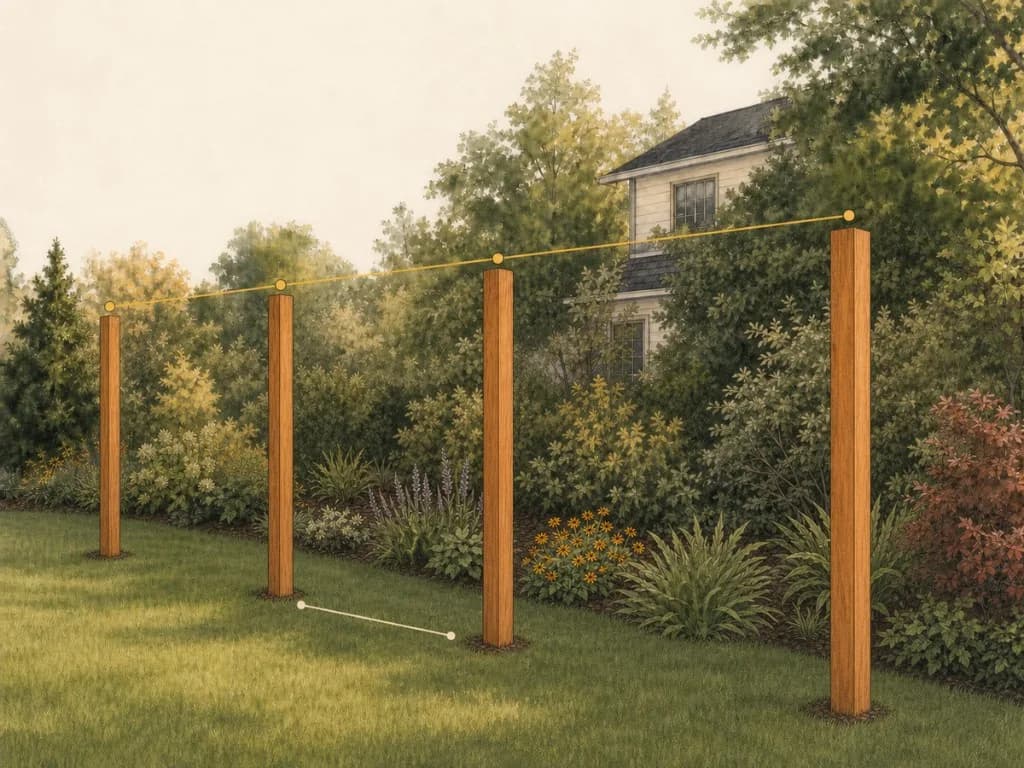
Post spacing is the distance from the middle of one post to the middle of the next. Smaller spacing means more posts, more holes, and usually more support—but follow the chosen fence system’s instructions.
Why it matters
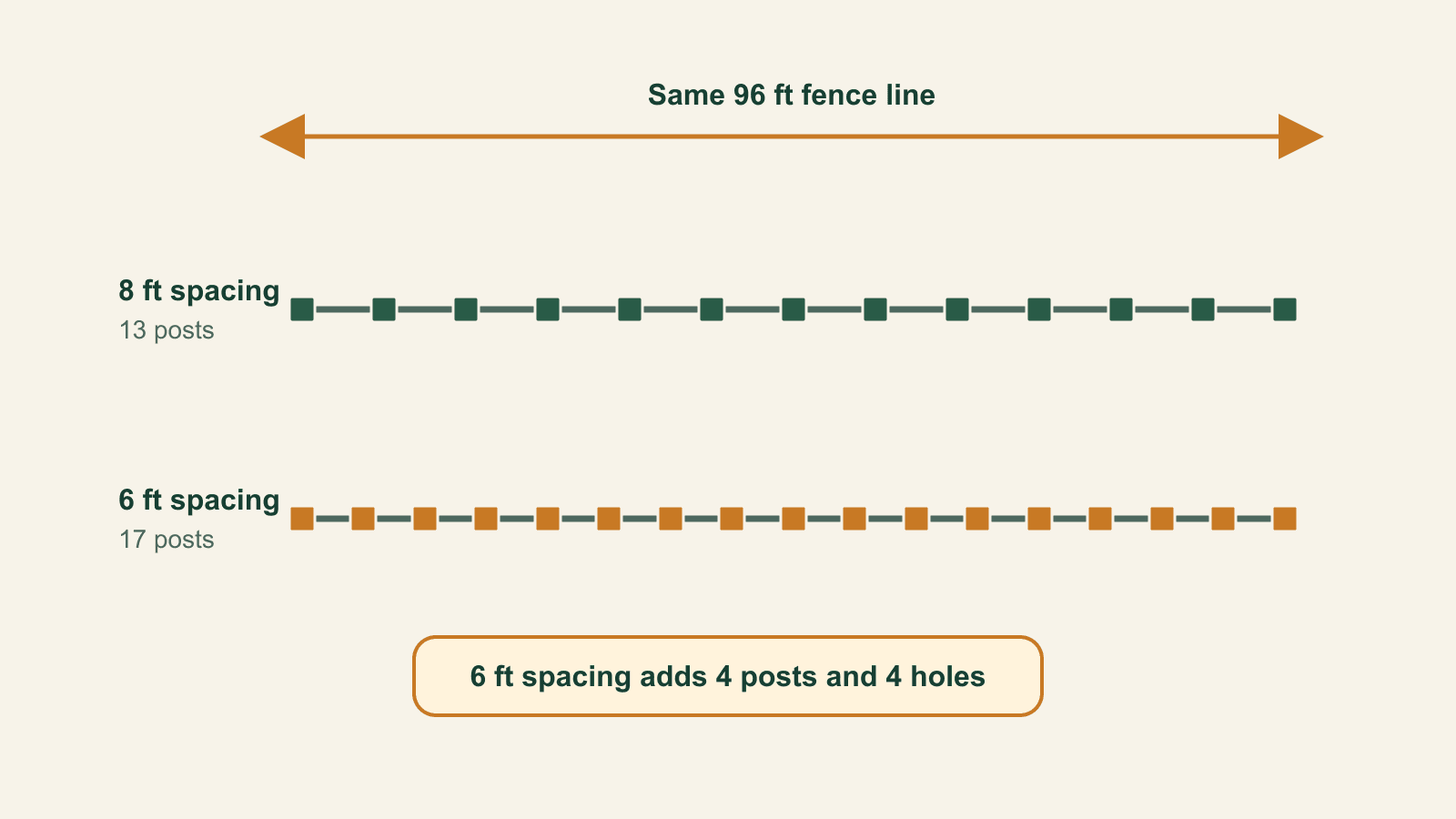
On a simple 96-foot straight fence, eight-foot spacing uses 13 posts; six-foot spacing uses 17. That is four extra posts and four extra holes before gates or corners are added.
Do this first
- Find the spacing required by the panel, picket, or chain-link system you want.
- Mark only the first and last post position on the ground.
- Use the planner to compare spacing choices on the same line.
- Treat gates, corners, and ends as special locations, not ordinary middle posts.
Use Fence Planner for this part
Compare a few plausible layouts before buying materials. The planner can show the difference in post count and a likely short final section.
How the estimate works
Spacing is usually measured on-center: middle of one post to middle of the next. The clear opening between post faces is a little smaller because each post has thickness. Count both end posts, then add a post for each full spacing along the line.
Educational planning content only. Not a substitute for local codes, surveys, engineering, or professional advice. See Methodology for how this guide was prepared and how the calculator works.